![]() |
![]() |
||||||||||||||||||||||||||||||||||||||||||||||||||||||||||||||||||||||||||||||||||||||||||||||||||||||||||||||||||||||||||||||||||||||||||||
Product #: PTX-002 anti-Fx1ASheep
Anti-Fx1A
|
|||||||||||||||||||||||||||||||||||||||||||||||||||||||||||||||||||||||||||||||||||||||||||||||||||||||||||||||||||||||||||||||||||||||||||||
|
|||||||||||||||||||||||||||||||||||||||||||||||||||||||||||||||||||||||||||||||||||||||||||||||||||||||||||||||||||||||||||||||||||||||||||||
Directions For Use:
1.
Preimmunization:
To
induce an accelerated passive Heymann nephritis (anti-Fx1A nephritis)
it is necessary to first immunize the rats with sheep immunoglobulin (1).
This will allow the rats to produce antibodies to sheep IgG prior to administering
the anti-Fx1A antibody, thus accelerating the course of the disease. If
this step is omitted the disease will be weaker and more protracted. Mixing the emulsion:
Each
rat will be injected with 0.5 ml of emulsion containing 2 mg sheep immunoglobulin
as immunogen. The emulsion is made with equal volumes of FCA and sheep
immunoglobulin solution. For 25 rats we recommend preparing a total of
15 ml of emulsion: 7.5 ml FCA plus 7.5 ml sheep immunoglobulin solution.
More than the required volume is necessary, because the final mixture
will be thick and recovery is inefficient. Mix the immunoglobulin solution
by inversion then withdraw 7.5 ml in 10 ml syringe and put aside. Place
the 20 ml syringe with blocked tip (included in kit) pointing down in
a bucket of ice. Place 7.5 ml of FCA in the syringe. Firmly grip syringe
and insert the homogenizer probe into the syringe bore down into the FCA.
Turn on the homogenizer to approximately 10-15,000 rpm moving the syringe
up and down to completely mix the emulsion from top to bottom. Slowly
inject the immunoglobulin solution into the FCA while continuing to mix
the emulsion (this should take at least 10 minutes, stop to cool the syringe
and emulsion on ice intermittently while mixing). Continue to mix another
5 minutes. The emulsion will be ready when the syringe can be inverted
at a 45 angle and the mixture is too thick to run down the side. At this
point remove the blockage at the syringe tip with pliers and secure an
18-gauge needle to the hub. Place the needle in an inverted glass syringe
(not supplied) with plunger open to make space for the emulsion to flow
into. 5 ml glass syringes are recommended because 0.5 ml volumes will
be injected in rats and larger syringes generally do not have appropriate
graduations. Glass is recommended because the thick emulsion in a plastic
syringe with a rubber plunger is excessively difficult to push and accurate
injection volumes are not attainable. Glass syringes can be cleaned with
acetone. Place plastic plunger into the 20 ml syringe and inject the
emulsion into the open space in the glass syringe to fill the barrel bottom
up, without forming an air pocket. When the glass syringe is filled, secure
a 20-gauge needle and push the plunger up until the air is fully expelled
and the emulsion is at the tip of the needle. The emulsion is now ready
for injection. If fewer rats are to be immunized, adjust the volumes proportionately.
The user is advised that recovery of the emulsion is less efficient with
smaller volumes. Excess sheep immunoglobulin and FCA have been provided
to compensate for multiple usages. Immunization:
This product has been determined to produce glomerulonephritis in 150-175
gm male Sprague-Dawley rats. Anti-Fx1A disease can be elicited in other
rat strains, however, production of nephritis is genetically predisposed
and we cannot guarantee success with other strains or gender. To
immunize the rats, one person should hold the rat gently, but firmly by
placing a gloved hand over the shoulders of the animal with the head toward
the palm. Lift the skin on the nape of the neck, insert the needle and
inject no more than 0.1 ml of the emulsion. Repeat in additional subcutaneous
sites until a total of 0.5 ml has been injected. Injections into multiple
sites are required to elicit a good immune response and to prevent abscess
formation. 2.
Injection of anti-Fx1A antibody:
Five days after preimmunization with sheep immunoglobulin anesthetize
rats and inject 1.0 ml of anti-Fx1A antibody into a tail vein over a 30
second period (Larger volumes are required for heavier rats). Production
of disease is dose dependent. For more disease inject more volume of antibody.
Doses over 2 ml are not recommended. It is important that the complete
dose of antibody is delivered. If the investigator is not experienced
with tail vein injections, we recommended a number of practice injections
of saline in sham rats before going forward antibody experiments. Disease
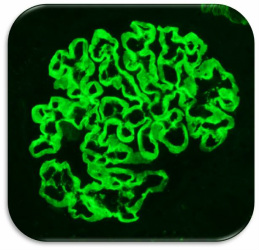
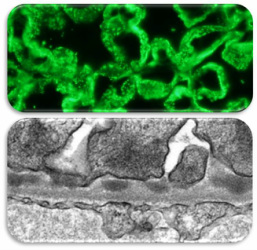
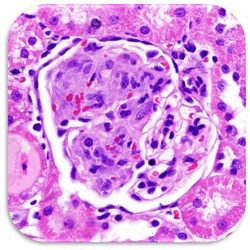
will be noticeable within 2 weeks by increased proteinuria and histological
alterations in glomerular structures. |
|||||||||||||||||||||||||||||||||||||||||||||||||||||||||||||||||||||||||||||||||||||||||||||||||||||||||||||||||||||||||||||||||||||||||||||
|
Home | Products | Services | Resources | Protocols | About Us | FAQ | Links |
|||||||||||||||||||||||||||||||||||||||||||||||||||||||||||||||||||||||||||||||||||||||||||||||||||||||||||||||||||||||||||||||||||||||||||||
|
|
|||||||||||||||||||||||||||||||||||||||||||||||||||||||||||||||||||||||||||||||||||||||||||||||||||||||||||||||||||||||||||||||||||||||||||||